

Brooklyn Nichols made history at Deka Worlds this month, becoming the first athlete to win the Deka Fit, Deka Mile, and Deka Strong. The result capped a season defined by steady improvement across strength, endurance, and race execution.
Brooklyn arrived at Deka Worlds shortly after Hyrox Chicago, where she ran a 1:01:05 — more than four minutes faster than her previous best — and now turns her attention to Hyrox Phoenix, with an eye toward another pro result and a potential path to DC Regionals.
The Hybrid Letter spoke with Brooklyn about her transition from dance to hybrid racing, the work behind her mental approach, and the season that led to her breakthrough.
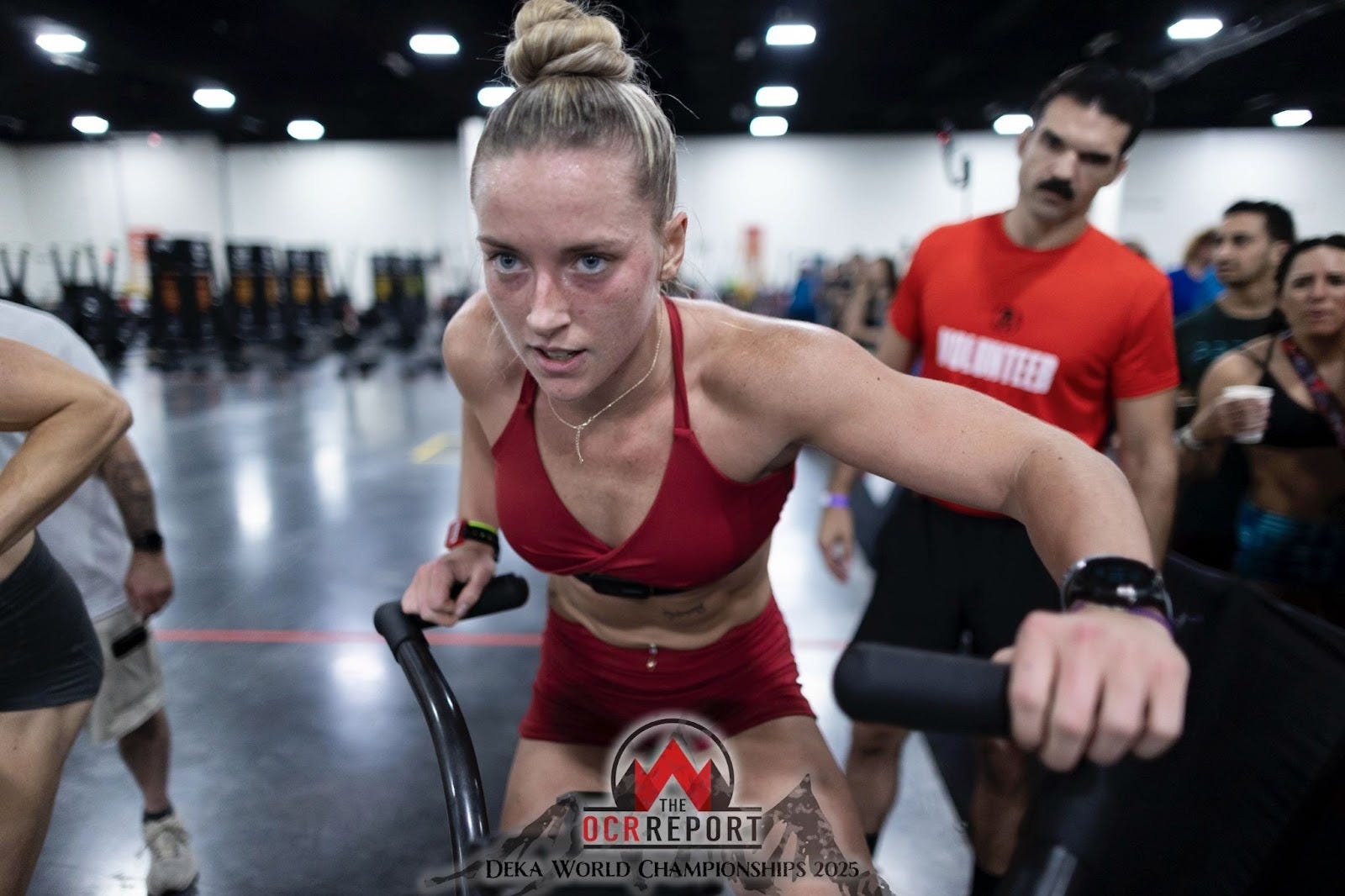
This interview has been edited for length and clarity.
The Hybrid Letter: Tell us about your athletic background.
Brooklyn Nichols: Athletically, I didn’t come from sports in the traditional sense — I was a dancer. Today, dance is respected as a sport, but back then it really wasn’t viewed that way. Around 17, I made a pretty dramatic transition from being a ballerina to picking up barbells. I went from wanting to be delicate and graceful to wanting to be hardcore and strong.
My family was very confused, but I found my thing immediately. Within a year I got my personal training certification, and a year later I was working in group fitness. I spent almost five years there, and that’s where I found hybrid racing. When DEKA was born, I felt like I was reborn as a hybrid athlete.
THL: When you first discovered hybrid training, what clicked for you?
BN: The first DEKA event we hosted at our gym was a DEKA Strong. As a coach, I jumped in to lead by example and ran a 16-flat on my first try, minutes ahead of everyone else. You could say I was young, or that most people were there just to try something new, but even then it was objectively fast.
That moment flipped a switch for me. I didn’t train for it — I just showed up. DEKA Strong feels like a dance to me: 12 minutes of choreography that has to be fluid and athletic. It’s short, so agility matters, endurance matters, and repetition matters. I realized, wow, I’m actually good at this. Then I learned there were longer races and thought, “Okay… I guess I have to start running.”
THL: Running used to be your weakness. Now you’re PR’ing half marathons. How did that change happen?
BN: Running is where I’ve spent the most time playing catch-up. While other kids were running track, I was doing pirouettes. I started taking running “seriously” after qualifying for all three DEKA races and calling Kevin Gregory to ask what I should do. You can probably guess his answer.
I knew Strong would be fine, the Mile would be manageable, but the Fit was going to be ugly. I spent about eight weeks doing almost nothing but running. I overdid it so badly that my psoas locked up and I could barely move a few days before Worlds in 2022.
I ended up fifth in the Fit, second in the Mile, and won the Strong, but it was humbling. I realized how much work I still had to do. Fast forward four years, and my Fit time is about ten minutes faster. That early struggle was brutal, but it built the foundation for everything that followed.
THL: How have you learned to balance strength, running, and hybrid work without breaking down?
BN: It’s come down to finding the right programming balance. I’ve worked with coaches who leaned heavily into metcons, others who focused on endurance, others on speed. I’ve learned something from all of them.
Now I finally feel like I have programming that balances everything — strength, endurance, intensity — while keeping me healthy. That’s been the biggest shift. When one piece gets ignored, something always falls apart. This is the first time it feels sustainable.
THL: Chicago felt like a breakthrough moment. What do you think set you up for that performance?
BN: Over the summer, I had a reactivated case of mono. I had it when I was 15, and it completely derailed my life — it took away dance, my friends, and contributed to an eating disorder. So when it came back, I was terrified.
I was exhausted all the time, falling asleep on the treadmill, losing weight, barely functioning. But my coach encouraged me to keep moving through it. I raced with mono — podiumed, broke the DEKA Ruck world record, and even ran a 1:05 Hyrox in Boston.
When I finally came out the other side, it felt like I had superpowers. My fitness dipped, then it exploded. I think pushing through something that hard changed me, mentally and physically.
THL: How do you think about recovery now?
BN: Recovery is non-negotiable now. Even after big performances, I force myself to take time off. You don’t lose fitness by resting — you gain it.
I have a full recovery team, I prioritize mobility, and my nutrition is completely dialed in. No drinking, no shortcuts. It was eye-opening to realize that if you want to be a professional athlete, you have to act like one all the time.
THL: Going into this season, were you focused on outcomes or staying present?
BN: Honestly, the idea of winning didn’t even feel possible until about two weeks before it happened. After Chicago, I sat on the couch with [boyfriend] Cole [Walkington] and said, “I think I can win everything.” It was more of a quiet realization than a goal.
I didn’t have time to manifest it or obsess over it. I was focused on Hyrox, not DEKA Worlds, and that actually helped. There was no pressure of wanting it too badly.
THL: Did your race approach change this season?
BN: This weekend was different. Cole told me, “Go fast. Take chances.” Normally I’d sit mid-pack and chase. This time, I led. The confidence wasn’t proven yet, but I trusted it.
Sometimes you have to take the risk and see what happens.
THL: Which race challenged you the most?
BN: The Strong, because everyone expected me to win it. The pressure was external, and that was terrifying. I love that race — I love the hurt, and I love a burpee battle — but stepping onto the start line knowing everyone assumed the outcome was heavy.
I had to remind myself that everything I’d earned already still mattered, no matter what happened next.
THL: How do you stay mentally steady in those high-pressure moments?
BN: I talk to myself a lot. I literally have conversations in my head. Before every race, I look in the mirror and say, “You are strong. You are fast. You are just as capable as anyone else.”
That’s my mantra. If someone else can do it, so can I.
You can follow Brooklyn on Instagram.
Inspiration of the Week: David van Wetherill
The Hybrid Letter spoke to David van Wetherill, a three-time Paralympian who represented Great Britain in table tennis who transitioned to endurance sports. David has set world records in the crutch marathon and recently has competed in Hyrox.
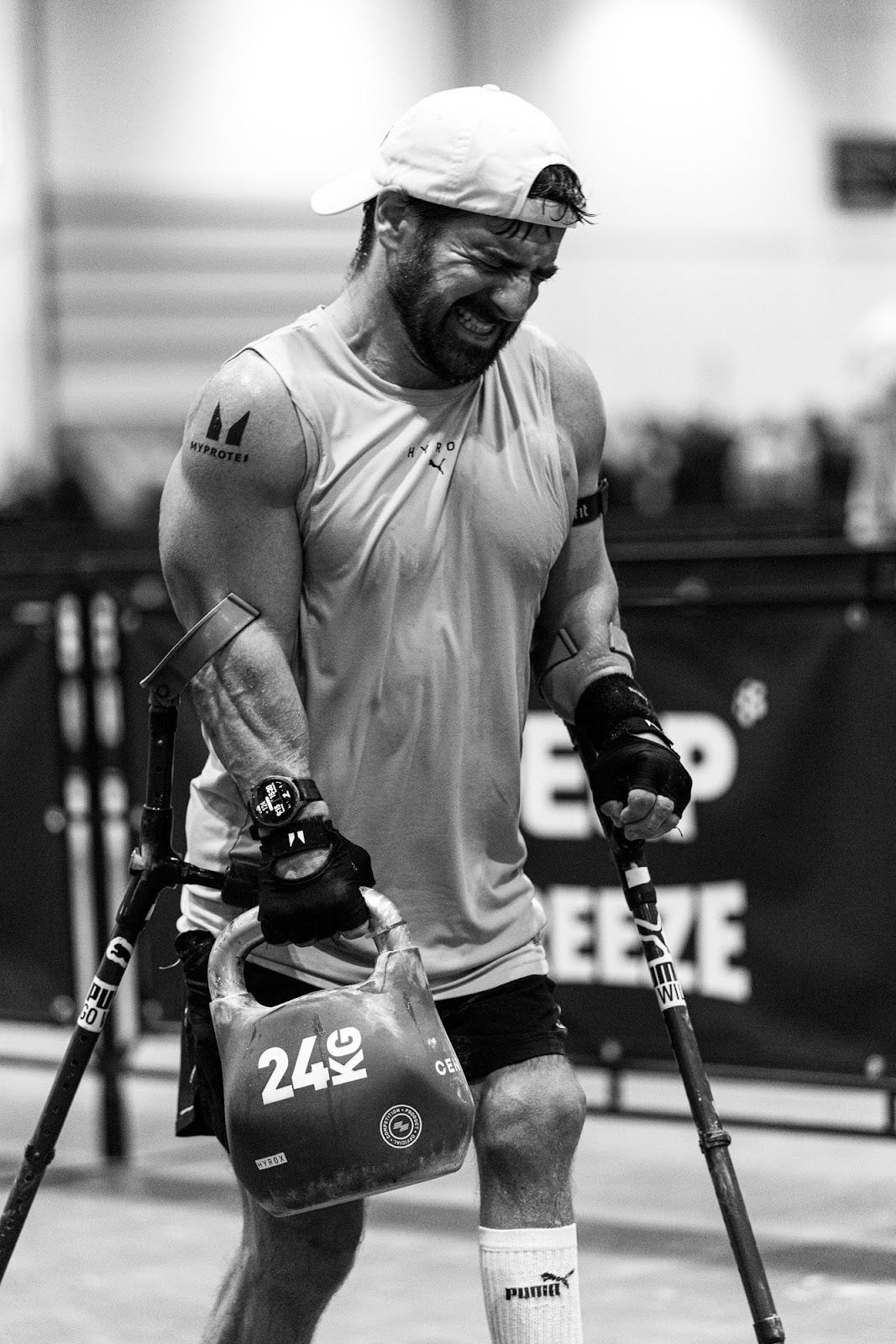
The Hybrid Letter: Can you share your background and what shaped your path into sport?
David van Wetherill: I was born with a bone condition called multiple epiphyseal dysplasia. In simple terms, it’s a painful arthritic condition where my bones don’t grow properly. The joint heads are misshapen, which makes movement very grindy — not ideal for endurance running or something like Hyrox.
I wasn’t diagnosed until I was five. Before that, my parents just thought I was growing a bit shorter. I was also born with a hole in my heart, which was the bigger priority early on, and I had open-heart surgery when I was 11.
All of it made me incredibly health-conscious and driven to stay in the best shape possible. Being strong and building stability around my joints has been essential. What I’m able to do now is honestly beyond anything I could have imagined as a kid. It all shaped my mindset and my ethos from a very young age.
THL: As a kid, did you feel limited, or were you always pushing yourself?
DVW: I was very sporty. Both my parents were PE teachers, and I have an older brother who’s able-bodied, tall, strong — he held all the school records. I idolized him.
Because of that, I didn’t really feel disabled growing up. I think that realization came later, when I was slower, in pain, and wondering why I couldn’t do what everyone else could. Mostly, I just wanted to fit in.
It’s funny how the world has changed. Back then, everyone wanted to be the same. Now, your uniqueness is your superpower. I genuinely wouldn’t be here talking to you today if it weren’t for that difference. It took decades to fully realize, but sport helped me embrace it in a really powerful way.
THL: You’ve gravitated toward endurance. What keeps pulling you in?
DVW: Endurance is almost a compliment in itself. People say things like, “You’re a machine,” but the truth is everyone is capable of incredible things. What separates people isn’t physical ability — it’s mindset.
The further I’ve gone, the more I’ve realized this is almost entirely mental, and that’s why I’m obsessed with it. The feeling of reaching a finish line or the top of a mountain is unmatched. I’m addicted to life, to that feeling, because I know what it’s like not to be able to do those things.
There are things I can’t do, and that’s okay. Endurance has parallels everywhere in life — grief, breakups, bad days, just getting out of bed. Having a goal and a sense of purpose changes everything. For me, that purpose has grown into inspiring others, especially kids with disabilities, because I was once that kid looking for role models.
THL: How did Hyrox first come onto your radar?
DVW: I’ve always trained in a hybrid way — fast and strong. I did a lot of CrossFit before Hyrox, so once it exploded, it was impossible to ignore. I thought it would be fun, but I wasn’t prepared for how much I’d love it.
Hyrox gave me something the Paralympics never quite could. In the Paralympics, everything is separate. In Hyrox, it’s you versus you. Elites, adaptive athletes, everyday people — everyone is on the same course. That inclusivity hit me immediately, literally on the first lap.
It became an obsession because it’s challenging but manageable. With my bone condition, I can push hard without it destroying me for weeks. You can adapt movements, leave the ego at the door, and still feel incredibly proud of what you’ve done. I love everything Hyrox represents.
THL: You’ve helped shape the adaptive rulebook. How did that happen?
DVW: Honestly, just by racing a lot. I’ve tested different adaptations — farmers carries with one crutch, two crutches, different lunge depths, weights, distances — and I’ve tracked heart rate and station times.
For lower-limb athletes like me, distances are usually fine, but weights are easier to scale fairly. The goal is relative difficulty. Ideally, elite adaptive athletes should finish within a comparable time window — not three hours, not 30 minutes.
It’s not easy. Some stations are much harder than others, especially late in the race. But there’s constant feedback, constant iteration, and real effort to improve. The intent is absolutely there.
THL: Is there a race that stands out most to you?
DVW: Two, for opposite reasons. My fastest race was Berlin this year — a 1:36 on crutches. I’m incredibly proud of that physical performance.
But the Chicago World Championships meant more to me. I spent the entire week doing finish-line interviews, barely slept, raced exhausted, and it didn’t matter. On the final lap, the judges and Hyrox staff ran with me. They waited through wall balls that took forever and cheered me home.
That moment perfectly captured what this sport stands for. It’s one of the best moments of my life.
THL: What would you say to someone nervous about trying Hyrox for the first time?
DVW: Don’t overthink it. Let go of the outcome and just start. You don’t need to see the top of the mountain to take the first step.
When you release expectations, you often go further than you ever thought possible. I promise you’ll be proud of what you accomplish. And if you don’t have a good experience, come find me. But I genuinely believe it’s something you’ll carry with you for life.
Athlete of the Week: Immie Cross
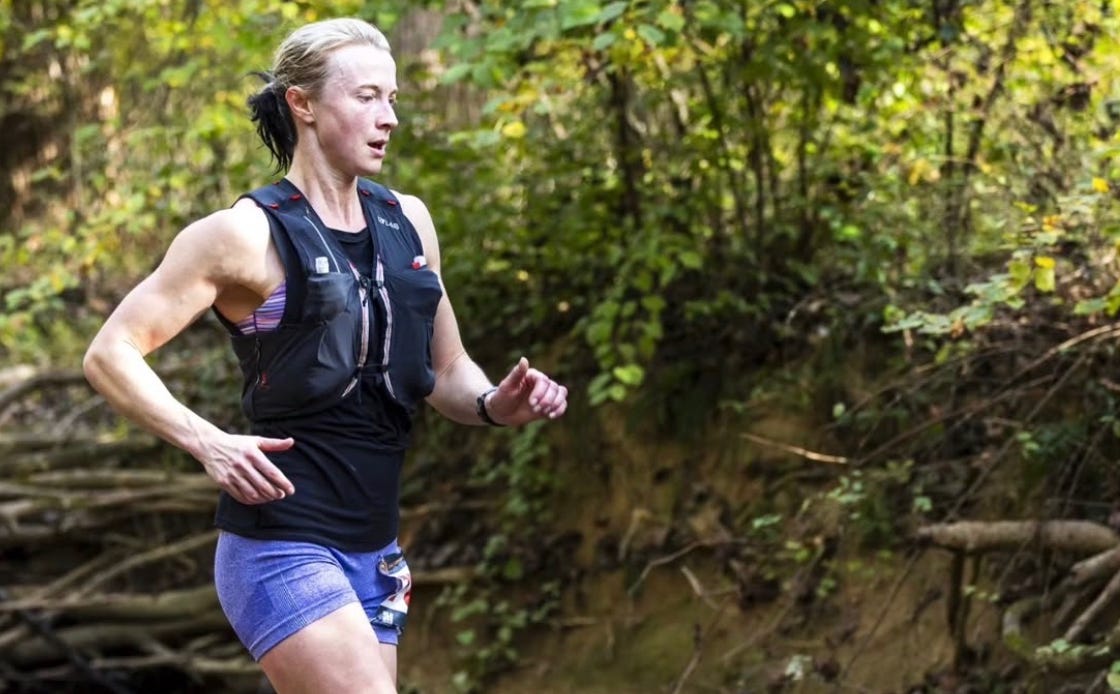
Name: Immie Cross
Age: 41
Hometown: Ashburn, VA
When did you start hybrid racing? My first Hyrox race was women’s doubles in the fall of 2022 — open division, because that was the only option at the time. One of my friends kept nagging me to do one, and after I had a really successful Deka Strong at an affiliate gym, the owner, Chris, started pushing me too. That’s when I decided I’d go for it, but I didn’t want to do it alone. I reached out to my friend Nic, and that’s how it started.
Favorite race to date? The 2023 World Championship in Manchester, England. Nic and I won the 40–49 women’s doubles, and my parents and old school friends were there watching. It was a monumental day.
Do you have a race goal? Right now, the goal is to qualify for Elite 15 Doubles in DC with my new race partner, Elise. From there, we want to get our time down to sub–one hour for the World Championship in Sweden. Ultimately, we’re aiming to podium at Worlds.
Favorite station? Farmer’s carry — probably because it’s the easiest.
Least favorite station? Burpee broad jumps. I am epically slow at them. No matter what I do, I’m slow.
Is there anything you wish you’d known when you first started training or racing? I wish I’d had more faith in myself. I tend to get imposter syndrome when I’m warming up and looking at the competition. I have to remind myself of everything I’ve accomplished — that I earned the right to be there and that I deserve it. I love to win, but I can accept not winning if I know I didn’t put in the work required to get there.
I really enjoy the newsletter! Thanks for all of your hard work in putting it out each week. I hope you are able to resume its publication in the future!