

Kat Fahsbender is quickly becoming one of the most unmistakable forces in the sport, breaking into the regional elite rankings with a dominant solo win in Atlanta (1:02:55) and a blistering pro doubles victory with Morgan Schultz in Dallas (55:56) that vaulted them into the top 15 worldwide. Her rise reflects not only sharper training but a growing command of the mental side of racing—an ability to stay composed, race her own race, and turn lessons from each event into progress.
The Hybrid Letter spoke with Kat about mindset, training, nutrition, and the pursuit of elite races.
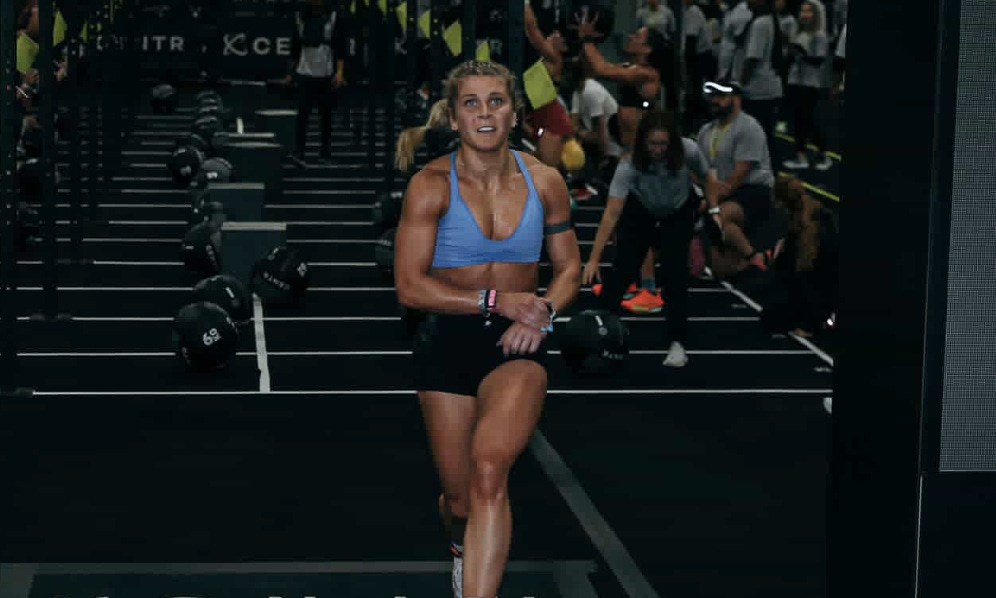
This interview is edited for length and clarity.
The Hybrid Letter: What is your athletic background?
Kat Fahsbender: Since seventh grade I’ve basically always been running. In high school I ran track, but softball was my main sport. I lifted on my own at the gym and taught myself everything about lifting and form by watching videos. My form has changed so much over the years. I try to never stop learning.In college I played D3 softball as an outfielder. I loved the outfield—diving for balls, hitting, all of it. And even then I still ran constantly. I’d run every morning, lift for softball, then go to the gym. I was always moving. Looking back, that’s probably when I built my endurance: hours of activity every day. I’ve always been active, but now I get to focus on it intentionally.
THL: What did you have to work on the most since getting into Hyrox?
KF: In Hyrox, you can always get better. Every race shows you something you need to work on—and then something else right after that.Running is a good example. I never used to do speed work. I just ran to run and didn’t follow any kind of progressive plan. In my first year of Hyrox, I didn’t do structured running at all; I only did Hyrox workouts and circuits. That’s completely changed this past year. If you want to compete at a high level, running has to be something you train for specifically.
THL: What do you feel is your superpower in this type of racing?
KF: My mentality. Hyrox is something you train your mind for almost more than your body. It’s such a demanding sport with so much happening at once. If one thing goes wrong, you can lose it fast. But if your mindset is locked in, I truly believe you can be successful—and that’s something I train every day.Even outside the gym, it stays with me. If something doesn’t go right at work, I ask myself how I can pivot and keep moving. Hyrox has helped me develop that mindset, and it’s translated far beyond the race course. Mindset is everything.
THL: What is your self-talk during a race?
KF: I constantly tell myself to run my race. The adrenaline is so high at the start, and that’s when you see people go out way too fast. Even in Atlanta, a few girls absolutely sent it, and the veterans hung back because we knew what was coming. It only takes one race to learn that lesson.During the race, my mindset is the same: one step, one more rep, keep moving. I stay locked in, because the moment you get distracted is the moment things slip. I’m always reminding myself, you know you can do this, just stay focused.
THL: Has your strategy changed from your first pro race to now?
KF: Oh my goodness, yes. My first pro race was a year ago and I absolutely died. I went out too hot, skied way too fast, and blew up right after the sled pull—like everybody does. Now my strategy is totally different.On the first run, I keep things controlled and comfortable. It’s still fast, because everyone is fast, but nothing crazy. I go out steady and push a little when it makes sense, but at every station I remind myself it’s not worth burning everything too early. And when it gets to the burpees, my rule is simple: don’t look up.
The more you race, the more comfortable you get with pacing. Mine has changed a lot since that first race. I learned so much. Even in Toronto, I was just excited to be out there—I get so excited on race day.
THL: Do you like racing people or racing for time?
KF: Oh, other people for sure. That’s a no-brainer. I have my best races when I’m competing against others. At Worlds this past year, racing against Morgan Schultz—she got me by three seconds. It still hurts. In Atlanta, Terra was right behind me and gave me the push I needed to run an awesome race.Even with Deka, it’s just fun. We’re all toeing the line together, trying to be our best selves, and we bring that out of one another.
THL: What excites you about potentially competing with the Elite 15 in DC?
KF: These women — they’re people I look up to. I’ve raced against Lauren and Vivian in Deka, and I’m right there. I’m hanging on. I’d love to see where I stack up in Hyrox running next to them. I’m also curious how much faster I’d be with them pulling me.
I haven’t been tested like that against the top elite athletes in Hyrox yet, but I know it’s coming this season. I keep telling myself it’s coming. It’ll happen. They’re incredible to me. The past two years, watching them, I’d look at the leaderboard and think, I want to be on that one day. Ever since France, that’s been my top goal, and I’m working toward it every single day.
What they do is unreal—running sub-hour Hyrox times, the mental grit, the physical demand, the complete fitness required. I admire it so much.
THL: What have been some of the biggest game changers or shifts you’ve made this past year in training?
KF: I started working with a nutritionist. I don’t work with her anymore because I learned so much from that period and now I know what I’m doing. I worked with Corinna, who’s amazing. I started in April and stopped when she had her baby.Going into Worlds, I knew I needed to get my shit together. No more “I’m not fueled enough,” no more “I’m not eating enough,” no more feeling awful because of it. If you want to be elite, you have to do everything required to get there.
I’ve always trained since seventh grade, but the eating disorder stuff started when I first got into working out. It’s something I’ll probably deal with forever, but I’m learning to manage it so much better. Honestly, I think Hyrox came into my life to help me do that. I haven’t always had the best relationship with food, but now I look at it differently. It’s not just eating—it’s fueling for what I’m doing. Understanding that has changed my mindset so much.
The difference in how I feel now compared to a year ago is insane, and it’s solely from fueling correctly. When it comes to eating, that’s what stays on my mind. If I’m having a bad mental day, I remind myself: don’t let one day ruin what you want long-term. Lock in. Do what you need to do. It’s just a feeling. Focus on what you want and where you’re going.
THL: What are some of your fueling and recovery strategies before big races?
KF: We focus so much on carb loading and making big changes before a race, but it doesn’t need to be that complicated. Going into Atlanta, I emphasized carbs a little more than usual, but nothing extreme. My time isn’t going to change based on two days of aggressive carb loading.The day before, I was just intentional about including carbs, but I didn’t feel bloated or switch up my routine. That’s the annoying part—keeping things the same takes discipline when traveling, but it’s worth it. People always say not to change anything before a race, and it sounds repetitive, but it’s true. When you travel, you naturally eat different foods at different times, and that can affect you more than you think. The safest move is to keep things as normal as possible.
THL: What have you found to be the benefits of working with a coach?
KF: I coach four people myself, but even as a coach, I still need a coach. Having one relieves so much stress because it gives me someone to talk to—someone who supports me beyond sending workouts.You can have the perfect training plan, but if no one is coaching you through the hard days, pushing you, or reminding you that you’re capable even when you feel off, you miss the most important part of coaching. Trust is everything. If you don’t believe in what your coach gives you, the relationship won’t work and you won’t get the results you want. A strong, trusting one-on-one relationship is what helps you improve.
For me, having a coach has been amazing. I love waking up, seeing my workout, and knowing exactly what the plan is. A good coach explains why you’re doing certain things and gives you baseline tests so you can track progress and see the work paying off. Even on days you feel off, those benchmarks remind you everything is moving the right direction. Honestly, everything is better with a coach.
THL: What do you have lined up next?
KF: Phoenix 2026 Elite Doubles with Morgan. I also bought a solo ticket for Phoenix because I believe one race is Friday and the other Saturday. I’d love to go abroad to race again, but I work and it’s expensive. It sucks because I love this so much, and one day I hope I can do it as much as I want.THL: Is there something you remind yourself or others when they’re chasing goals like this?
KF: I always tell people that once you set your mind to something, you’re the only person who can get in your own way. I’ve put so much dedication into what I do, and it’s been incredibly rewarding. I don’t let anyone else’s opinions distract me. I keep my eyes on the prize. No one can stand in your way except yourself. Just believe in yourself—you can achieve so much.
You can follow Kat on Instagram.
Science corner: You don’t need to train to failure
Many hybrid athletes are looking to improve their strength. But what protocols are most effective? A recent study of men in the International Journal of Strength and Conditioning found that training in sets that leave one to six reps in reserve produced similar strength gains as training to failure. The study, which looked at strength gains from bench press and squat, found that those training to failure actually had slightly lower strength gains.
For hybrid athletes, the finding is particularly significant because training with reps in reserve makes recovery easier and reduces injury risk.
Athlete of the Week: Sarah Whitmore
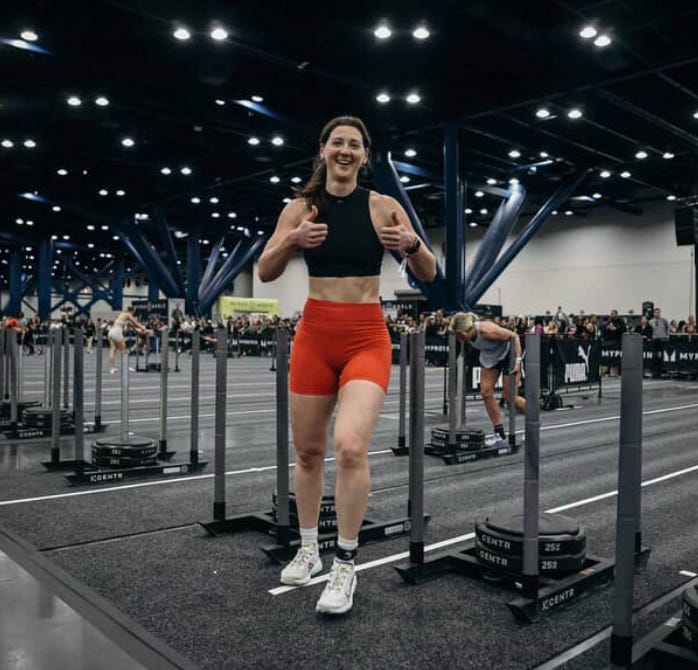
Name: Sarah Whitmore
Age: 31
Hometown: Charlotte, NC
When did you start hybrid training? I started hybrid training as a way to push past plateaus and mix my love for strength and conditioning. There’s nothing like a little competition to push me to new heights. But what’s kept me obsessed is the community. Getting to do hard things—like Hyrox races—with your friends, supporting each other through training and race weekends, is incredibly special.
Favorite race to date? My home gym, East Austin Athletic Club, hosted a comp called The Showdown. I teamed up with my strongest gym friends, and we ended up taking first place. This was before I was even a coach, so beating the coaching staff (and all the 20-somethings, LOL) was a level of glory I’d never known before.
Favorite Hyrox race? Definitely the 4-person Mixed Relay in Mexico City. The conditions were wild—7,000 feet above sea level with 25% less oxygen than in Texas. Every one of us said it was the hardest thing we’ve ever done, which made it even sweeter when we snagged 3rd place in our division and brought home that oh-so-coveted HYROX winner’s banner. Standing up there with my team was a peak life moment.
Favorite station? Wall Balls, no question. I’m 5’11” with a lot of lower-body power, so I can practically touch the target just standing there. With those 9-pound race-weight balls… game over for y’all.
Least favorite station? Does running count? Because if so—yes, the running. Every time we hit those 1K laps, I want to exit my body. Just get me back to the station, puh-lease.
Something you wish you knew when you started? That 50% of HYROX is running… ugh.