

Wes Robertson, the driving force behind the LifeTime Games, brings an educator’s grounding and a coach’s precision to a rapidly evolving hybrid-fitness landscape. After moving from the classroom into the training world, he helped design and launch the inaugural LT Games—an October debut that drew top athletes, highlighted the importance of pacing, and unveiled a course that rewarded smart strategy as much as raw fitness. With the Games returning for a one-day event on April 26 in Minneapolis, Robertson is now focused on refining the format and shaping LifeTime’s broader ambitions in hybrid competition.
The Hybrid Letter spoke with Wes about the thinking behind the event, what will change in April, and why the Games are purposefully staying intimate.
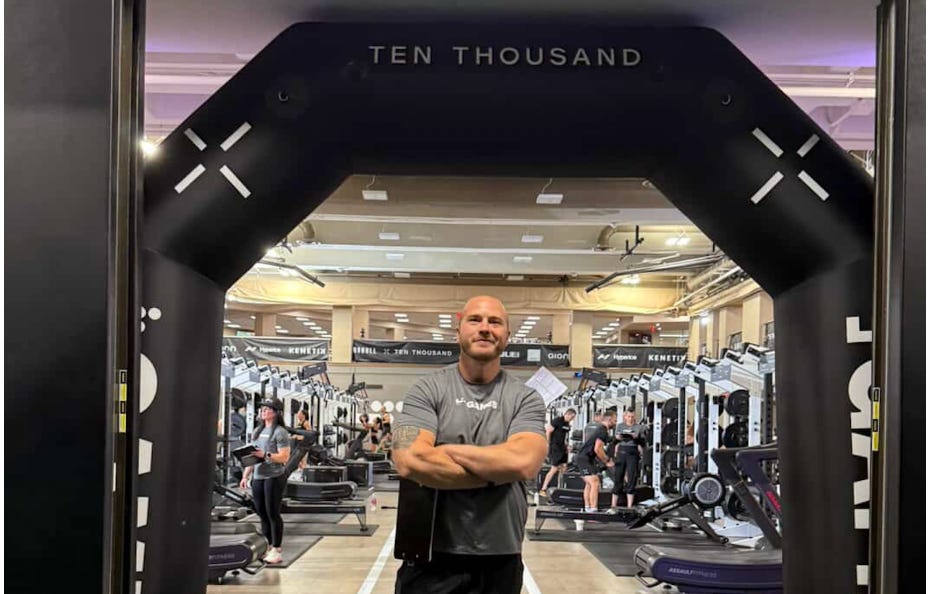
This interview has been edited for length and clarity.
The Hybrid Letter: Can you tell us a bit about your background?
Wes Robertson: I’ve been with Lifetime for almost seven years, but my background started in education. My undergrad is in physical education and recreation, and I later earned my master’s in athletic administration. I spent five and a half years teaching, but eventually burned out. I had moved from South Dakota to Minneapolis for a teaching job on the north side of the city, which is a very under-resourced area. It was emotionally heavy. The school year was longer, the demands were high, and it became a lot.
I started looking for something new, and fitness had always been a passion. I grew up in sports, went through my own weight-loss journey after gaining weight in college, and being active felt natural. My first job in fitness was as an assistant manager at an Orangetheory Fitness.
THL: How did your fitness career evolve from there to Lifetime?
WR: Orangetheory was a great place to start, and things moved quickly. I went from assistant manager to coach to regional fitness coach. For three years, every new Orangetheory in Minnesota went through me. I trained all the new coaches, which helped me build a big network.
One day, someone from Lifetime pulled me aside after class and said they’d been taking my sessions and wanted to grab coffee. It turned into the classic “Let us tell you about Lifetime” conversation. And in Minnesota, Lifetime is the place to be. I joined in February 2017 and started in group training.
After COVID, I moved into a corporate role. My current title is Senior Programming Operations Manager, which means I help oversee all group training programs—GTX, Alpha Strength, Alpha Conditioning, and Ultra Fit. I hire the teams who build the programming, and I give final approval before everything goes to the app and screens.
THL: Was a hybrid-style competition always on the radar?
WR: About 15–17 months ago, Bahram, our CEO and founder, decided to move into the hybrid fitness space, and I raised my hand immediately. I’ve competed in regional and local CrossFit events for about four years, so the competitive side of hybrid fitness really appealed to me. This project became my focus. After months of testing ideas, we launched our first competition in October. No one expected it to land the way it did—it made a real splash. Now we’re in scramble mode preparing for the next one.
THL: What was the foundation you wanted to build the Lifetime Games on?
WR: The idea was simple: create something we could replicate inside our clubs. Hyrox is an incredible business, but we have enough square footage to host events without relying on convention centers. The question was how to fit a full hybrid competition into a standard Lifetime footprint and how to better use the spaces we already have.
Bahram pushed us to rethink our basketball courts. They’re big, often underused, and frankly don’t generate much revenue anymore. That became the foundation.
Programming was the trickiest piece. We’re probably on version seven. We tested concepts, scrapped concepts, moved movements around, and refined everything internally.
For context, I’ve followed the CrossFit world more closely than the hybrid world over the last five years, and there’s always been this narrative that hybrid is “CrossFit’s endurance stepchild” or that the two are rivals. With LT Games, we’re trying to land squarely in the middle. CrossFit athletes are incredibly fit. Hyrox athletes are incredibly fit. LT Games creates a space where both can show up on equal footing and we can see who rises as the best hybrid athlete.
THL: Looking at earlier versions, what did you feel you were missing?
WR: One of the biggest questions was volume—how much work each station should require. It ties into the broader debate in hybrid fitness about whether lighter weights and higher reps or pure strength should matter more. We had to determine what volume created a consistent, recognizable stimulus from station to station.
The idea for descending volume actually came from Ultra Fit, one of our small-group classes. It’s a sprint-based workout where the amount of work gets shorter so athletes can get faster as they progress. We applied that concept to LT Games: early stations require the most effort, and as the workout goes on, volume drops so athletes can pick up the pace.
THL: What was the “happy place” you wanted to land when it came to volume?
WR: There was a plan—until Lauren Weeks blew it up. One of the coolest parts of our layout, which you might have seen on the livestream, is the TORQ setup. It’s fully modular, so in the future we can move stations, change the order, or swap in new movements.
Conor Fleming, our head judge, and I agreed early that once athletes dipped under 40 minutes, we’d need to rethink the workout. Then Lauren showed up and ran 36 minutes right away. The idea was for elite one-percenters to post fast times, but for most athletes to land around an hour. That still feels like the right benchmark for a general fitness standard—even if the elites keep pushing the limits.
THL: How did you determine the difference between male and female weights and reps?
WR: This is where my OCD around numbers kicked in. We wanted the workloads to line up cleanly. For example, 10,000 pounds on a deadlift works well at 225 pounds. Drop to 185, and the rep count gets messy. So we landed on this structure: the female workload outside of the runs would be 75 percent of the male workload for all strength pieces.
For strength work, I’m confident in that ratio. You’ll always have outliers, but overall it holds. On the cardio pieces, though, I’ll admit the women’s version is probably a little light.
THL: Why was this first event so important to you?
WR: We wanted people to understand how serious Lifetime is about the hybrid space. Having top-tier athletes on the floor mattered, and between Conor, myself, and a few coaches, we probably sent twenty times more DMs than anyone would expect. We invited everyone because we wanted to show what LT Games can be.
Ultimately we wanted athletes to see that Lifetime is an incredible training environment. The facilities, coaches, and equipment are top-tier. Now we’re putting ourselves in the conversation as one of the top competitions worldwide.
THL: Was there a part of the race that surprised you when you did it live?
WR: No major surprises. We already knew overhead work isn’t a strong point for most athletes, so shoulder-to-overhead and dumbbell ground-to-overhead would be key. Something I understood going in—but many competitors didn’t—is that the course is intentionally designed to punch you in the face. If you come out too hot on that first 1,000-meter run, you’re in trouble.
Pacing is everything. In other events, you can start fast and recover later. In LT Games, there’s nowhere to hide. Recovery means standing there staring at a barbell or rowing slowly, and elite athletes hate that. A lot of people got into trouble early because they were too excited and went out too fast. That was the biggest surprise for athletes who hadn’t practiced the format.
THL: Was there a big win for you through this first event?
WR: I’m always my own biggest critic, so the second it ended, my mind went straight to improvements. But once I settled down, I was incredibly proud of the team. None of us expected the buzz it created on social media or within the hybrid community, especially for a first event.
The only thing we kicked ourselves for was not having the next race ready to announce immediately. We could have captured even more momentum. But overall, the most exciting part was seeing how many people became interested in LT Games, including athletes we never expected to pay attention.
THL: What is the future of LT Games over the next year?
WR: Everything depends on construction timelines. Lifetime has the space to build several more of these training centers across the country, which would give people more places to train. Our goal is for members to use these hubs not only to prepare for LT Games but for anything else they want to pursue.
I’ve been doing all my Hyrox prep in the LT Games space using the Assault Runners, and we know a lot of people want that environment. Hybrid training can be hard to do on a traditional fitness floor. These centers give people the room and equipment they need.
We’re not trying to match Hyrox’s scale. We don’t have the capacity or the space. We’ll keep our events smaller and more intimate. That allows for a more personalized experience: better swag bags, Normatec boots, time in the sauna.
For our April event in Minneapolis, we’re planning a one-day format instead of two. It will be a longer day, but it recreates the energy everyone loved on Saturday. We’ll have highlighted heats and a proper podium, which we couldn’t fully do last time because the event was split. We’ve taken feedback seriously and want to pack more people into the day while bringing in pros and big names.
You can follow the LT Games and Wes on Instagram.
Science corner: The first Hyrox sports science report
Hyrox recently released its first-ever report on sports science. It was produced by a council of leading experts on the science of hybrid racing and training. Some key takeaways:
“HYROX is a sport best performed at a high-to-max level of intensity. Heart rate, blood lactate and rate of perceived effort remain high throughout the study. Athlete exposure to maximum intensity during training will boost V02 max for improved performance.”
“[M]id-race running segments (runs 5 to 8) show the strongest correlations with total time, meaning those who struggle here tend to lose the most time.”
“In terms of the workout stations… wall balls, sandbag lunges, and burpee broad jumps showed strong correlations with total time, but also had the widest performance variability. This suggests that these segments, while harder to master, are the most impactful and are therefore the key splits in the race.”
You can read the full report here.
Hybrid Athlete of the Week: Alex Susi
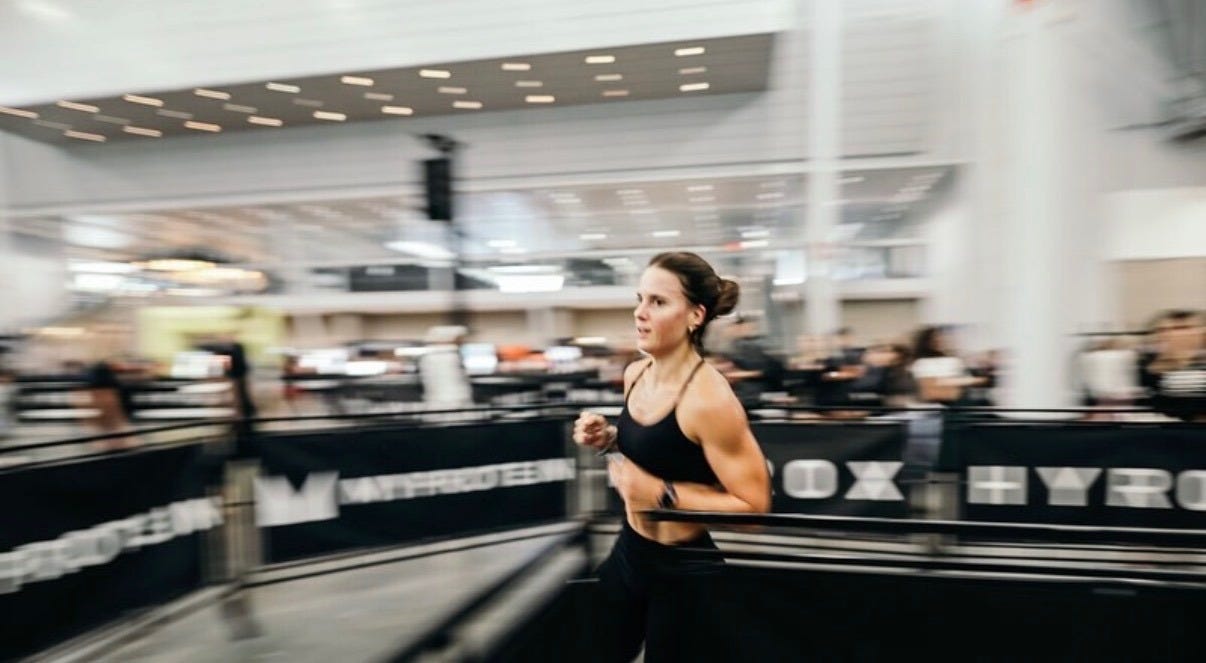
Name: Alex Susi
Age:
Hometown: Chicago
When did you start hybrid training? I’ve always loved being active and chasing different training goals. I rowed in high school, and after that I’d cycle through lifting phases, running phases, and everything in between—basically doing hybrid training without realizing it. I was never the strongest or the fastest, but I could do a bit of both. When some gym friends told me about Hyrox in the summer of 2024, it immediately felt like the perfect fit. I tried it—and got hooked.
Favorite race to date? Two stand out. Anaheim was my first solo race after doing mixed doubles in Chicago with my boyfriend, and every moment of that race felt new—scary, exciting, and unpredictable in the best way. My recent Chicago race was meaningful for different reasons: I’d had a ton of life stress, little training, and almost canceled. I went in with zero expectations and still had a great day. It reminded me I don’t have to control every detail for things to go well.
And the Chicago vibes were incredible—women helping each other in warm-up, cheering on the course, celebrating each other’s efforts. I’ve been in plenty of cutthroat environments; Hyrox isn’t one of them. I always leave feeling proud to be part of this community.
Race goal? I’m using the rest of 2025 to “play” with training—less structure, more experimentation. I know my biggest gains will come from improving my run speed, so I’ll focus on that January through March, race in late spring to check progress, and then build toward Worlds.
Favorite station? The sleds. Early on I treated them with dread, but they’ve become the place where I establish myself in the race. They bring out the competitor in me and give me momentum for the rest of the course.
Least favorite station? The farmers carry. I get so in my head about it. I’ve never dropped the kettlebells in a race, but the mechanics trigger a kind of panic I don’t feel anywhere else. I’ve learned to ask myself “What actually hurts?”— and the answer is usually nothing. It’s just nerves, and I talk myself through it.
Things you wish you knew when you started? You can’t shortcut the engine. Long sessions, strength, mobility, and consistent work are what make everything else possible. Once in-season, learning the race and understanding your mind can save more time than extra fitness.
Incredible article 👏🏼